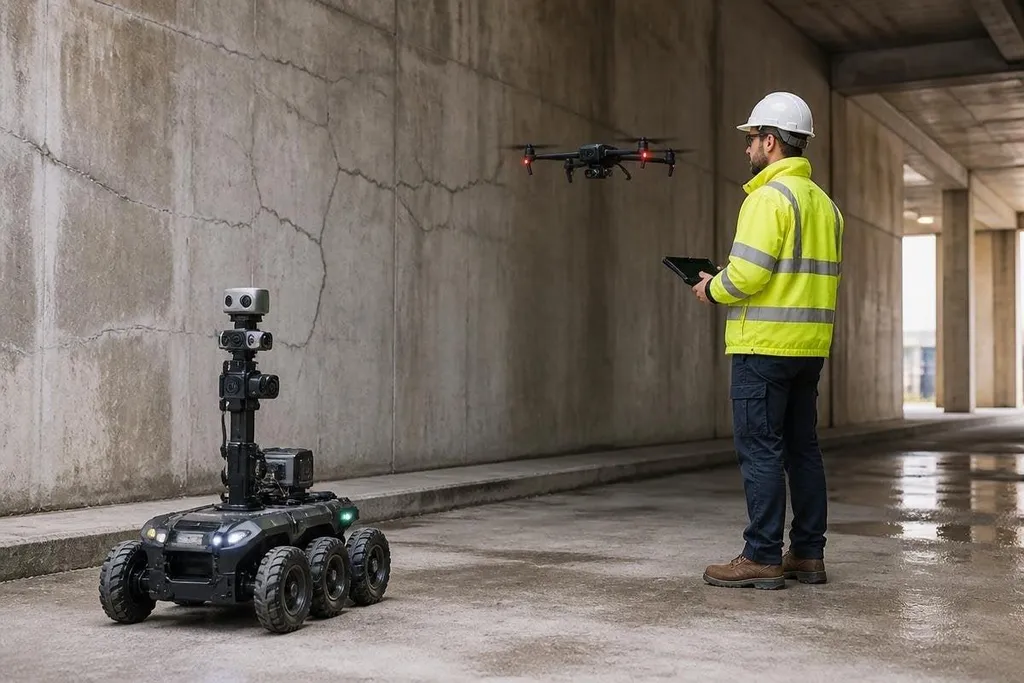
A crack can begin as a thin line in concrete, steel, or masonry long before people see a safety problem. Robots could help by checking large surfaces on a repeatable route, then sending engineers the locations that need a closer look.
- Cameras find visible changes in walls, floors, beams, and joints.
- Thermal, ultrasonic, or acoustic sensors can add clues below the surface.
- Engineers still need to confirm whether a crack affects the building’s strength.
What the robot can see
A ground robot can carry cameras through a basement, parking garage, tunnel, or plant room. A drone can inspect façades, roofs, bridges, and other areas that are hard or risky for a person to reach.
The first step is image capture. Software compares new images with earlier ones and marks changes in crack length, width, or position. That repeat visit matters because a single image shows condition, while a series of images can show movement.
Lighting causes a common problem. A shadow, wet patch, paint mark, or camera angle can look like a new crack. The robot needs a fixed route, steady camera position, and records that show where each image came from.
Why one sensor may not be enough
A visible crack tells you where a surface has changed. It does not always show how far the damage goes or why it formed. Water, corrosion, movement, poor curing, vibration, and temperature changes can produce different signs.
Thermal cameras can show temperature differences across a surface. Ultrasonic sensors send sound through a material and measure how that signal returns. Acoustic sensors listen for small releases of energy linked to movement inside a structure. Each method answers a different question.
The useful approach is sensor fusion, which means comparing readings from more than one sensor.
A camera may mark a line on a wall, while ultrasonic data gives an engineer another way to check the area. That does not turn a robot into a structural engineer. It gives the engineer better evidence to review.
A crack report matters when it gives an engineer enough detail to decide whether an area needs more testing or repair. Robot24.com's building inspection reports can show how robots collect that evidence and where human review still begins. The next step is turning those findings into a repair decision.
From a crack report to a repair decision
Finding a crack is only the start. The robot must attach the location to a building plan or a known position, save the images and sensor readings, and show how the result changed over time.
That record can help an inspection team rank areas for a closer visit. A crack near a load-bearing joint may need a different response from one in a finish layer. The software can sort findings, but the building’s design, materials, age, and use still shape the decision.
A good system also records uncertainty. If dust blocked the camera, water affected a reading, or the robot could not reach an area, the report should say so. A clean-looking map can mislead people when the robot had poor access.
The hard part is proving that a detected change predicts a real loss of strength. Many cracks are harmless surface damage. Others grow slowly and point to a larger issue. Until inspection teams compare robot records with physical checks over time, early warning claims remain unproven.
What to check before buying
A building owner or inspection manager should ask these questions before choosing a system:
- Route control: Can the robot return to the same viewing points on later visits?
- Location records: Does each image or sensor reading connect to a floor plan or fixed marker?
- Surface range: Can the system work on concrete, painted steel, brick, and wet areas found on site?
- Human review: Can an engineer inspect the original data instead of receiving only a risk score?
- Access limits: What happens in narrow rooms, poor light, stairs, rain, dust, or blocked paths?
- Evidence quality: Has the maker shown results against physical inspections on the type of structure you manage?
I'd use a robot first to improve inspection records, not to approve a building without human review.
The first system worth paying for will be the one that returns to the same place, shows the change clearly, and tells you what it could not inspect.